
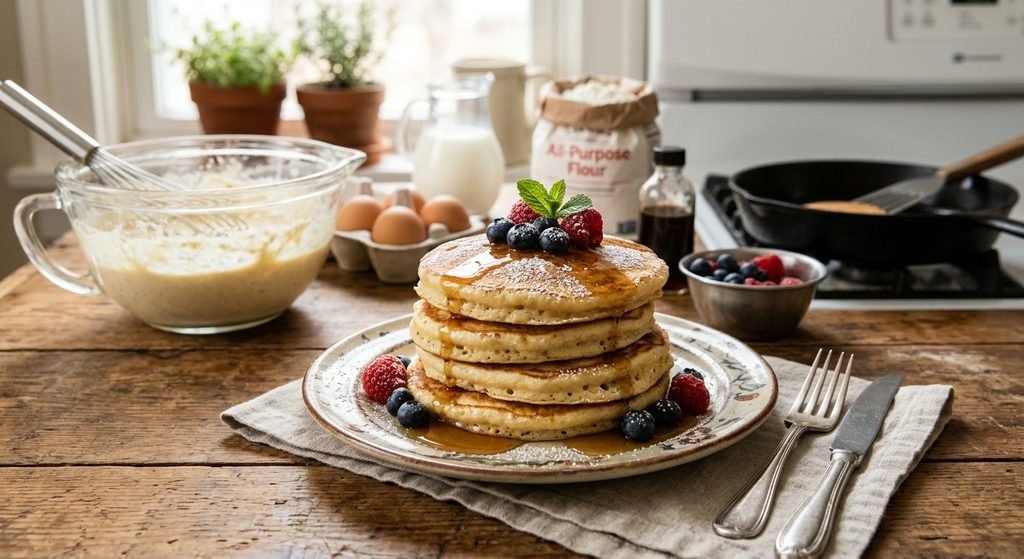
Easy Homemade Pancakes Recipe: How to Make Fluffy Pancakes from Scratch
Meta Title: Easy Homemade Pancakes Recipe – Fluffy Pancakes from Scratch
Meta Description: Learn how to make fluffy homemade pancakes from scratch with simple ingredients. Follow this easy pancake recipe for a delicious breakfast your whole family will love.
Suggested URL Slug: easy-homemade-pancakes-recipe
Introduction
There is something special about waking up to the smell of freshly cooked pancakes in the kitchen. Whether it is a relaxing Sunday morning, a family breakfast, or a special holiday brunch, homemade pancakes are one of the easiest and most delicious ways to start your day.
Pancakes are loved around the world because they are simple to prepare, require basic kitchen ingredients, and can be customized in countless ways. You can enjoy them with maple syrup, fresh strawberries, blueberries, bananas, chocolate chips, or even a little butter.
Although pancake mixes are available in grocery stores, making pancakes from scratch is often more satisfying. You have complete control over the ingredients, flavor, texture, and sweetness. The best part is that you do not need professional cooking skills to make them.
In this guide, you will learn how to make soft, fluffy, golden-brown pancakes using simple ingredients that you probably already have in your kitchen. We will also cover useful cooking techniques, common mistakes, topping ideas, storage instructions, and different ways to customize your pancakes.
If you have been searching for an easy homemade pancake recipe that produces delicious results every time, this guide from CookingCrafts is a great place to start.
Why You Will Love This Homemade Pancakes Recipe
There are many reasons to make pancakes at home instead of purchasing ready-made mixes.
1. Simple Ingredients
You do not need expensive or difficult-to-find ingredients. Most homemade pancake recipes use flour, milk, eggs, sugar, butter, and baking powder.
2. Quick Preparation
This recipe requires only a few minutes of preparation. Once your batter is ready, the pancakes cook quickly in a regular frying pan or griddle.
3. Soft and Fluffy Texture
Using the correct ingredient measurements and mixing technique helps create pancakes that are light, tender, and fluffy.
4. Easy to Customize
You can add fresh fruit, chocolate chips, cinnamon, nuts, or other ingredients to create different flavors.
5. Perfect for the Whole Family
Homemade pancakes are suitable for family breakfasts, weekend brunches, and special occasions.
Preparation Time and Cooking Time
Here is an approximate time breakdown for this recipe:
- Preparation Time: 10 minutes
- Cooking Time: 15 minutes
- Total Time: 25 minutes
- Servings: 3–4 people
- Yield: Approximately 8 medium pancakes
- Difficulty Level: Easy
These times may vary depending on your cooking equipment and the size of your pancakes.
Ingredients for Homemade Fluffy Pancakes
Before starting, collect all your ingredients and measure them properly. Accurate measurements are important because they help produce consistent results.
Dry Ingredients
1. All-Purpose Flour – 1 Cup
All-purpose flour provides the structure of your pancakes. It creates a soft texture while helping the batter hold its shape during cooking.
2. Granulated Sugar – 2 Tablespoons
Sugar adds a mild sweetness and helps the pancakes develop a beautiful golden-brown color.
3. Baking Powder – 1 Teaspoon
Baking powder is one of the most important ingredients in fluffy pancakes. It helps the batter rise and creates a light texture.
4. Baking Soda – 1/2 Teaspoon
Baking soda helps with browning and contributes to a tender texture, especially when used with an acidic ingredient such as buttermilk.
5. Salt – 1/4 Teaspoon
A small amount of salt balances the sweetness and improves the overall flavor.
Wet Ingredients
1. Milk – 1 Cup
Milk provides moisture and helps combine the dry ingredients. Whole milk produces a richer flavor, but you can also use low-fat milk.
2. One Large Egg
Eggs help bind the ingredients together and contribute to the structure and softness of the pancakes.
3. Melted Butter – 2 Tablespoons
Butter adds richness, flavor, and moisture. Allow the melted butter to cool slightly before adding it to the other ingredients.
4. Vanilla Extract – 1 Teaspoon
Vanilla extract gives pancakes a pleasant aroma and a slightly sweet flavor.
Kitchen Equipment You Will Need
You do not need complicated equipment to prepare homemade pancakes.
Here are the basic kitchen tools:
- One large mixing bowl
- One medium mixing bowl
- Measuring cups and spoons
- A whisk
- A rubber spatula
- A nonstick frying pan or griddle
- A pancake spatula
- A serving plate
A nonstick pan is especially helpful because it makes flipping pancakes easier and reduces the amount of butter or oil needed.
Step-by-Step Instructions for Making Homemade Pancakes
Follow these instructions carefully to prepare soft, fluffy, and delicious pancakes.
Step 1: Prepare the Dry Ingredients
Start by taking a large mixing bowl. Add the all-purpose flour, granulated sugar, baking powder, baking soda, and salt.
Use a whisk to combine everything evenly.
Mixing the dry ingredients first helps distribute the baking powder and baking soda throughout the flour. This is important because unevenly distributed leavening agents can cause inconsistent results.
Avoid skipping this step, especially when making pancakes from scratch.
Step 2: Prepare the Wet Ingredients
Take another bowl and add the milk, egg, melted butter, and vanilla extract.
Whisk these ingredients until they are properly combined.
Make sure the melted butter is not extremely hot. Very hot butter can partially cook the egg, which may affect the texture of your batter.
If your milk and egg are at room temperature, they will generally combine more easily with the melted butter.
Step 3: Combine the Wet and Dry Ingredients
Slowly pour the wet mixture into the bowl containing the dry ingredients.
Use a whisk or spatula to gently combine everything.
The most important thing to remember is not to overmix the batter.
Your pancake batter does not need to be completely smooth. A few small lumps are perfectly normal.
Overmixing can develop too much gluten in the flour, resulting in dense or chewy pancakes instead of light and fluffy ones.
Once the ingredients are combined, stop mixing.
Step 4: Allow the Batter to Rest
Let the pancake batter rest for approximately 5–10 minutes.
This short resting period allows the flour to absorb some of the liquid and helps create a more consistent texture.
It also gives you time to prepare your cooking area and select your favorite pancake toppings.
Do not leave the batter sitting for an excessively long time because the leavening ingredients become less effective as the batter stands.
Step 5: Preheat Your Pan
Place a nonstick frying pan or griddle over medium-low heat.
Allow it to warm up for a few minutes.
Add a small amount of butter or cooking oil to lightly grease the surface.
Avoid using extremely high heat. Pancakes need enough time to cook through without burning on the outside.
If the pan becomes too hot, the pancakes may develop dark brown spots while remaining undercooked in the center.
Step 6: Pour the Pancake Batter
Use a measuring cup or ladle to pour approximately 1/4 cup of batter onto the heated pan.
This amount generally creates a medium-sized pancake.
Leave enough space between pancakes if you are cooking more than one at a time.
The batter should spread naturally into a round shape. You do not need to press it down with a spatula.
Step 7: Cook Until Bubbles Appear
Allow the pancake to cook for approximately 2–3 minutes.
As it cooks, small bubbles will begin appearing on the surface.
The edges will gradually become slightly firm, while the center will start looking less wet.
These are signs that the pancake is ready to flip.
Avoid flipping too early because the pancake may break or lose its shape.
Step 8: Flip the Pancake Carefully
Slide a spatula underneath the pancake and gently flip it.
Cook the opposite side for approximately 1–2 minutes, or until it becomes golden brown and fully cooked.
The second side usually cooks faster than the first, so keep an eye on it.
Transfer the finished pancake to a serving plate.
Step 9: Repeat the Cooking Process
Continue cooking the remaining batter using the same method.
If the pan becomes too hot, slightly reduce the heat.
You may also need to add a little more butter between batches.
Avoid stacking very hot pancakes too tightly if you want to maintain their texture.
Step 10: Serve Your Pancakes
Once all the pancakes are ready, serve them warm with your favorite toppings.
Maple syrup, fresh berries, sliced bananas, honey, and butter are excellent choices.
Your homemade fluffy pancakes are now ready to enjoy!
Best Toppings for Homemade Pancakes
One of the best things about pancakes is that you can serve them in many different ways.
Here are some popular topping ideas.
1. Classic Maple Syrup and Butter
Maple syrup and butter are a traditional pancake combination.
Place a small piece of butter on top of a warm pancake and pour maple syrup over it.
The butter melts into the pancake, creating a rich and delicious flavor.
2. Fresh Strawberries and Blueberries
Fresh berries add natural sweetness, color, and a refreshing taste.
Slice strawberries into small pieces and arrange them over your pancakes with blueberries.
You can also add a little honey or maple syrup.
3. Banana and Honey
Sliced bananas are another excellent pancake topping.
Arrange banana slices over the pancakes and drizzle with honey.
This combination creates a naturally sweet breakfast.
4. Chocolate Chips
If you enjoy chocolate, try adding chocolate chips to your pancakes.
You can mix them directly into the batter or sprinkle them over the finished pancakes.
Chocolate chips are especially popular with children.
5. Peanut Butter
Spread a thin layer of peanut butter over warm pancakes.
You can combine it with sliced bananas for a delicious breakfast.
6. Whipped Cream
For a more special breakfast or brunch, add whipped cream and fresh strawberries.
This combination gives your pancakes a dessert-like appearance and flavor.
Important Tips for Making Extra Fluffy Pancakes
Even though pancakes are easy to prepare, a few simple techniques can make a significant difference.
Here are some useful tips to improve your results.
Do Not Overmix the Batter
This is one of the most important rules. Mixing the batter too much can develop excess gluten and make the pancakes tough.
Stop mixing once the dry ingredients are incorporated.
Use Fresh Baking Powder
Old baking powder may lose its effectiveness over time. This can prevent your pancakes from rising properly.
Always check the expiration date before using it.
Measure Ingredients Correctly
Adding too much flour can make the batter thick and produce dense pancakes.
Use proper measuring cups and level off the flour rather than packing it tightly into the measuring cup.
Maintain the Correct Pan Temperature
Medium-low heat generally works well for pancakes.
A properly heated pan allows the inside to cook while the outside develops an attractive golden color.
Avoid Pressing the Pancakes
Never press pancakes with a spatula while they are cooking.
This pushes out some of the air and can make them flatter and denser.
Use Buttermilk for Extra Tenderness
If you enjoy slightly tangy and tender pancakes, try replacing regular milk with buttermilk.
Buttermilk works particularly well with baking soda and adds a pleasant flavor.
Common Mistakes to Avoid When Making Pancakes
If your homemade pancakes do not turn out as expected, one of these common mistakes may be responsible.
Using Too Much Flour
Too much flour creates a thick batter that may produce heavy pancakes.
Always measure the flour carefully.
Cooking at Excessively High Temperature
High heat can burn the outside before the inside has finished cooking.
Keep the temperature moderate and adjust it when necessary.
Flipping the Pancakes Too Early
Flipping before bubbles appear and the edges begin to set can cause the pancake to break.
Wait until the first side is properly cooked.
Using Cold Melted Butter
If the butter has become solid again, it may not mix evenly into the batter.
Make sure it is melted but not excessively hot.
Making the Batter Too Smooth
Many beginners believe pancake batter must be completely smooth.
However, a few small lumps are normal and usually produce better results.
Leaving the Batter Too Long
Pancake batter is best cooked shortly after mixing and resting.
Leaving it for several hours can reduce its ability to rise properly.
Delicious Variations of Homemade Pancakes
Once you have mastered the basic pancake recipe, you can experiment with different ingredients.
Here are some delicious variations to try.
1. Chocolate Chip Pancakes
Add approximately 1/2 cup of chocolate chips to your prepared batter.
Gently fold them in before cooking.
You can use milk chocolate, dark chocolate, or mini chocolate chips.
Serve with fresh strawberries or a small amount of maple syrup.
2. Blueberry Pancakes
Add fresh or frozen blueberries to the batter.
You can gently fold them in or place a few blueberries on each pancake after pouring the batter into the pan.
Blueberries provide a fruity flavor that works beautifully with the soft pancake texture.
3. Banana Pancakes
Mash one ripe banana and mix it into the wet ingredients.
Reduce the added sugar slightly if your banana is very sweet.
These pancakes have a mild banana flavor and a soft texture.
4. Cinnamon Pancakes
Add 1/2 teaspoon of ground cinnamon to the dry ingredients.
Cinnamon gives pancakes a warm aroma and makes them especially enjoyable during colder months.
You can serve them with sliced apples and maple syrup.
5. Whole Wheat Pancakes
Replace some or all of the all-purpose flour with whole wheat flour.
Whole wheat flour has a different texture and absorbs liquid differently, so you may need to adjust the amount of milk.
The resulting pancakes will have a heartier flavor.
How to Store Leftover Pancakes
If you prepare more pancakes than you can eat, there is no need to throw them away.
Proper storage helps maintain their quality and makes breakfast preparation easier on another day.
Storing Pancakes in the Refrigerator
Allow the pancakes to cool completely.
Place them in an airtight container or a resealable food storage bag.
Refrigerate them promptly.
For best quality, use refrigerated pancakes within 3–4 days.
Avoid leaving cooked pancakes at room temperature for more than two hours.
Freezing Homemade Pancakes
Pancakes can also be frozen for longer storage.
Follow these steps:
- Allow the pancakes to cool completely.
- Place them in a single layer on a baking sheet.
- Freeze until firm.
- Transfer them to a freezer-safe bag or airtight container.
- Separate layers with parchment paper to prevent sticking.
- Label the container with the preparation date.
For best quality, use frozen pancakes within approximately 2 months.
How to Reheat Pancakes
You can reheat refrigerated or frozen pancakes using several methods.
Microwave: Place pancakes on a microwave-safe plate and cover them with a slightly damp paper towel. Heat in short intervals until warm.
Oven: Arrange pancakes on a baking sheet and warm them in a preheated oven at 325°F (163°C) until heated through.
Toaster: Smaller pancakes can be reheated in a toaster, provided they fit safely.
When reheating frozen pancakes, follow your appliance instructions and ensure they are heated thoroughly.
What to Serve with Homemade Pancakes
Pancakes can be served as a complete breakfast when paired with other foods.
Here are some delicious combinations:
- Scrambled eggs and fresh fruit
- Crispy breakfast potatoes
- Turkey bacon or breakfast sausage
- Greek yogurt with berries
- Fresh orange juice
- Coffee or tea
- A glass of cold milk
For a balanced breakfast, consider combining pancakes with a source of protein and some fresh fruit.
Frequently Asked Questions About Homemade Pancakes
1. Why Are My Homemade Pancakes Not Fluffy?
There are several possible reasons.
You may have overmixed the batter, used expired baking powder, or added too much flour.
To improve the texture, mix the ingredients gently, measure everything accurately, and use fresh baking powder.
2. Can I Make Pancake Batter the Night Before?
It is generally better to prepare pancake batter shortly before cooking.
The baking powder and baking soda begin reacting after the wet and dry ingredients are combined.
For easier morning preparation, measure the dry and wet ingredients separately and refrigerate the wet ingredients until needed.
Combine them shortly before cooking.
3. Can I Make Pancakes Without Eggs?
Yes, you can make egg-free pancakes.
You can replace one egg with approximately 1/4 cup of unsweetened applesauce or a suitable commercial egg replacer.
Keep in mind that the texture may be slightly different from traditional pancakes.
4. Can I Use Water Instead of Milk?
Yes, water can replace milk if necessary.
However, milk generally produces richer and more flavorful pancakes.
When using water, you may notice a slightly less tender texture.
5. How Do I Know When Pancakes Are Ready to Flip?
Look for small bubbles forming across the surface.
The edges should also begin looking set rather than wet.
Carefully flip the pancake and cook the other side until golden brown and fully cooked.
6. Why Do My Pancakes Stick to the Pan?
Your pan may not be properly heated, or its nonstick surface may be damaged.
Lightly grease the cooking surface with butter or oil and make sure the pan is heated before adding the batter.
7. Can I Freeze Homemade Pancakes?
Yes. Allow the pancakes to cool completely, separate them with parchment paper, and place them in a freezer-safe container.
For best quality, use them within approximately two months.
8. What Is the Best Flour for Pancakes?
All-purpose flour is an excellent choice for traditional homemade pancakes.
It produces a soft texture and is widely available.
You can also experiment with whole wheat flour or other alternatives.
9. Can I Make Pancakes Without Butter?
Yes. You can replace melted butter with a similar amount of neutral vegetable oil.
The flavor may be slightly different, but the pancakes can still turn out soft and delicious.
10. Are Homemade Pancakes Good for Breakfast?
Homemade pancakes can be part of a satisfying breakfast.
For a more balanced meal, serve them with fresh fruit, eggs, yogurt, or another protein source.
Final Thoughts
Homemade pancakes are one of the easiest and most enjoyable breakfast recipes you can prepare in your kitchen. They require simple ingredients, basic cooking equipment, and only a little preparation.
The secret to making delicious pancakes is using accurate measurements, mixing the batter gently, allowing it to rest briefly, and cooking over moderate heat.
Whether you prefer classic pancakes with maple syrup, chocolate chip pancakes, fresh blueberry pancakes, or banana pancakes, this basic recipe gives you plenty of opportunities to experiment.
You can also prepare extra pancakes and store them in the refrigerator or freezer for convenient breakfasts throughout the week.
Cooking at home does not have to be complicated. Sometimes, the simplest recipes create the most memorable meals.
We hope this easy homemade pancake recipe helps you prepare a delicious breakfast for yourself and your family.
Keep exploring CookingCrafts for more easy recipes, helpful cooking tips, and delicious homemade food ideas. Happy Cooking!
Recipe Information
- Recipe Name: Easy Homemade Fluffy Pancakes
- Cuisine: American
- Course: Breakfast
- Preparation Time: 10 Minutes
- Cooking Time: 15 Minutes
- Total Time: 25 Minutes
- Servings: 3–4
- Difficulty: Easy
- Main Ingredients: Flour, Milk, Eggs, Butter, Baking Powder
Recipe Note: Cooking times and ingredient quantities are approximate and may vary depending on your equipment, pan size, and cooking conditions.