
Introduction
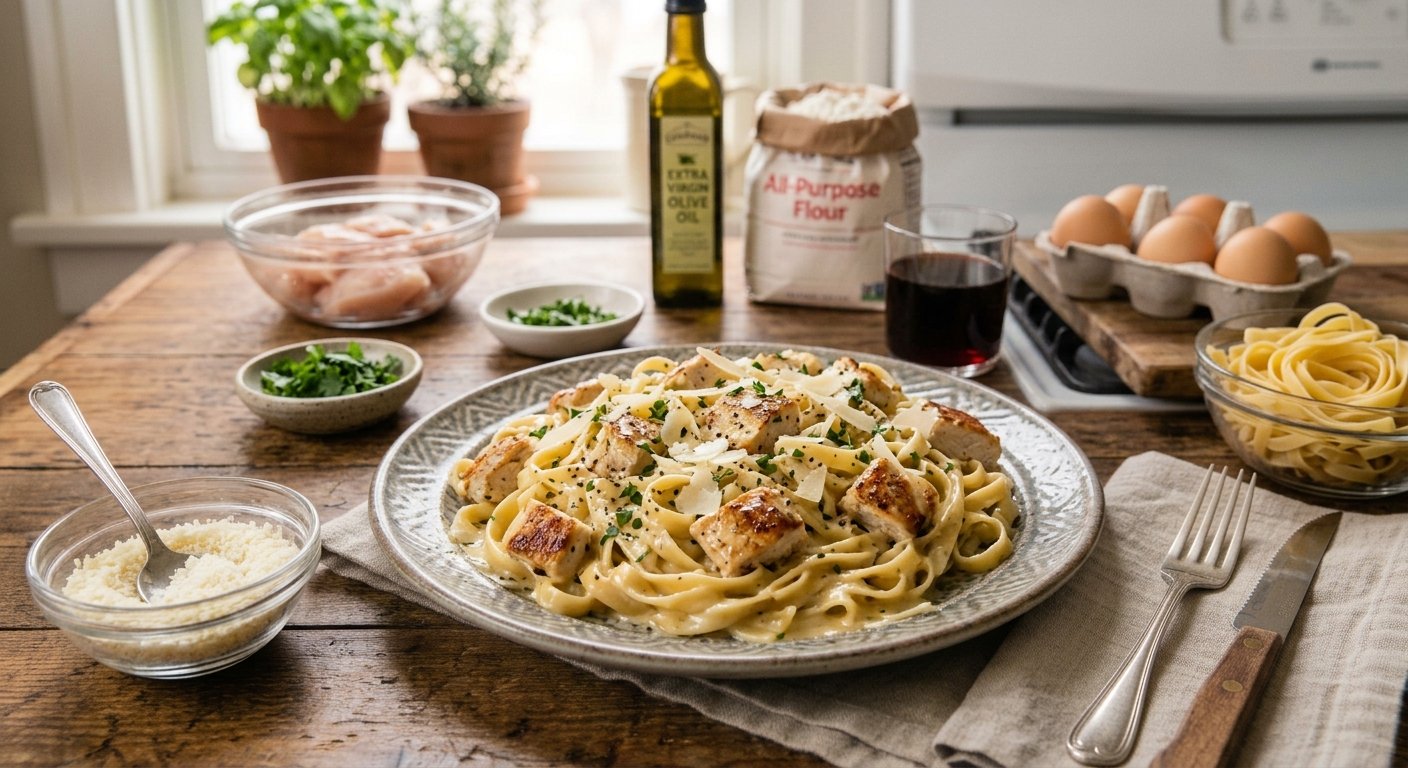
Chicken Alfredo is one of the most popular creamy pasta dishes in American kitchens. It combines tender pieces of seasoned chicken with perfectly cooked pasta and a rich Alfredo sauce made from butter, cream, garlic, and Parmesan cheese.
The result is a comforting meal that feels like restaurant food but can easily be prepared in your own kitchen.
One of the best things about this homemade Chicken Alfredo recipe is that it uses simple ingredients. You do not need expensive equipment or professional cooking skills. With a skillet, a saucepan, and a few basic ingredients, you can create a delicious dinner for the whole family.
The creamy sauce coats the pasta beautifully, while the chicken adds protein and a savory flavor. Fresh parsley, black pepper, and extra Parmesan cheese provide the finishing touches.
Although fettuccine is the traditional pasta choice for many American-style Alfredo recipes, you can also use linguine, penne, spaghetti, or other pasta shapes.
This recipe is perfect for busy weeknights, weekend family dinners, and occasions when you want to prepare something a little more special.
In this guide, you will learn how to prepare juicy chicken, cook pasta correctly, make a smooth Alfredo sauce, avoid common mistakes, and customize the recipe with vegetables and different seasonings.
What Is Chicken Alfredo?
Chicken Alfredo is a creamy pasta dish made with cooked chicken, pasta, and Alfredo sauce.
The sauce is commonly prepared with butter, heavy cream, and Parmesan cheese. Garlic, black pepper, and other seasonings are frequently added to create additional flavor.
The dish is especially popular in the United States, where it is served in restaurants and prepared at home in many different ways.
Traditional Italian fettuccine Alfredo is often made with butter, Parmesan cheese, and pasta water rather than heavy cream. The richer cream-based version became especially popular in American cooking.
Adding chicken turns the pasta into a more substantial meal.
Today, Chicken Alfredo is available in countless variations, including recipes with broccoli, mushrooms, spinach, shrimp, bacon, or Cajun seasoning.
Why You Will Love This Homemade Chicken Alfredo
There are several reasons to try this recipe.
Rich and creamy sauce: Butter, cream, and Parmesan create a smooth and satisfying sauce.
Tender chicken: Seasoned chicken adds savory flavor and makes the meal more filling.
Simple ingredients: Most ingredients are available at ordinary grocery stores.
Easy preparation: The recipe uses straightforward cooking methods.
Customizable: You can add vegetables, change the pasta shape, or adjust the seasoning.
Family-friendly: Creamy pasta is a popular dinner option for many households.
Great for special occasions: Homemade Chicken Alfredo looks and tastes impressive without requiring complicated techniques.
Recipe Overview
- Preparation Time: 15 minutes
- Cooking Time: 25 minutes
- Total Time: Approximately 40 minutes
- Servings: 4
- Course: Main Course
- Cuisine: American-Italian
- Cooking Method: Stovetop
- Difficulty: Easy to Moderate
Ingredients for Homemade Chicken Alfredo
The following ingredients make approximately four servings.
For the Chicken
- 2 medium boneless, skinless chicken breasts
- 1 tablespoon olive oil
- 1 teaspoon garlic powder
- ½ teaspoon paprika
- ½ teaspoon Italian seasoning
- ½ teaspoon salt
- ¼ teaspoon black pepper
For the Pasta
- 12 ounces fettuccine pasta
- Water for boiling
- 1 tablespoon salt for the pasta water
For the Alfredo Sauce
- 4 tablespoons unsalted butter
- 4 garlic cloves, minced
- 1½ cups heavy cream
- 1 cup freshly grated Parmesan cheese
- ½ teaspoon Italian seasoning
- ¼ teaspoon black pepper
- Salt, to taste
- ¼–½ cup reserved pasta water, as needed
For Garnishing
- 2 tablespoons chopped fresh parsley
- Extra grated Parmesan cheese
- A pinch of red pepper flakes, optional
- Freshly ground black pepper
Choosing the Best Chicken
Boneless, skinless chicken breasts are a popular choice for Chicken Alfredo because they cook relatively quickly and are easy to slice into strips.
Choose chicken breasts that are similar in size so they cook evenly.
If the chicken breasts are particularly thick, slice them horizontally into thinner cutlets or gently pound them to an even thickness.
Chicken thighs can also be used. They have a slightly richer flavor and may require a different cooking time depending on their size.
Always keep raw chicken refrigerated until preparation, and avoid using the same cutting board or utensils for cooked food unless they have been properly washed.
Choosing the Best Pasta
Fettuccine is the classic choice for American-style Chicken Alfredo.
Its wide, flat shape helps hold the creamy sauce and creates a satisfying texture.
However, you do not have to use fettuccine.
Other suitable options include:
- Linguine
- Spaghetti
- Penne
- Rigatoni
- Tagliatelle
- Bow-tie pasta
Short pasta shapes such as penne and rigatoni are especially useful when you want a dish that is easy to portion and serve.
Choose a pasta variety that you enjoy and follow the package instructions for cooking time.
Step-by-Step Instructions
Step 1: Prepare the Chicken
Place the chicken breasts on a clean cutting board.
Pat them dry with paper towels to remove excess moisture.
In a small bowl, combine garlic powder, paprika, Italian seasoning, salt, and black pepper.
Sprinkle the seasoning mixture evenly over both sides of the chicken.
Press the seasoning gently so it adheres to the surface.
Allow the chicken to rest for a few minutes while you prepare the pasta water.
Step 2: Boil the Pasta Water
Fill a large pot with water and bring it to a boil over high heat.
Add approximately one tablespoon of salt.
Once the water reaches a rolling boil, add the fettuccine.
Stir gently during the first minute to help prevent the pasta from sticking together.
Cook according to the package directions until al dente.
Al dente pasta should be tender but still have a slight firmness when bitten.
Step 3: Reserve Pasta Water
Before draining the pasta, carefully reserve approximately ½ cup of the cooking water.
This water contains starch released by the pasta during cooking.
The starch helps the Alfredo sauce cling to the noodles and can improve the consistency of the finished dish.
Drain the pasta using a colander.
Do not rinse the pasta unless the package specifically requires it for a particular preparation.
Set the pasta aside.
Step 4: Cook the Chicken
Place a large skillet over medium heat.
Add one tablespoon of olive oil.
Once the oil is warm, place the seasoned chicken breasts in the skillet.
Cook for approximately 5–7 minutes per side, depending on thickness.
Avoid moving the chicken constantly. Allowing it to cook undisturbed helps create a golden-brown surface.
Check the internal temperature using an instant-read thermometer.
Chicken should reach 165°F (74°C) at its thickest point.
If the outside becomes dark before the center is cooked, reduce the heat and continue cooking until safe.
Transfer the chicken to a clean plate.
Allow it to rest for approximately 5 minutes before slicing.
Step 5: Slice the Chicken
Once the chicken has rested, cut it into thin strips.
You can also cut it into bite-sized pieces if you prefer smaller portions.
Set the chicken aside while preparing the sauce.
Keeping the chicken separate until the sauce is ready helps prevent it from overcooking.
Step 6: Melt the Butter
Use the same skillet if it is clean enough and has no burnt residue.
Reduce the heat to medium-low.
Add four tablespoons of unsalted butter.
Allow the butter to melt gently.
Stir occasionally to prevent it from browning too quickly.
The remaining flavorful bits from cooking the chicken can add extra depth to the sauce, provided they are not burnt.
Step 7: Add Garlic
Add the minced garlic to the melted butter.
Cook for approximately 30–60 seconds while stirring continuously.
The garlic should become fragrant without turning dark brown.
Avoid cooking it for too long because burnt garlic can make the sauce taste bitter.
Step 8: Add Heavy Cream
Slowly pour the heavy cream into the skillet.
Stir gently until the cream combines with the melted butter and garlic.
Keep the heat at medium-low.
Allow the mixture to warm and reach a gentle simmer.
Do not allow the sauce to boil aggressively.
Step 9: Add Parmesan Cheese
Gradually add the freshly grated Parmesan cheese.
Stir continuously as the cheese melts.
The sauce should become smooth and creamy.
Add Italian seasoning and black pepper.
Taste the sauce before adding extra salt because Parmesan cheese already contains salt.
If the sauce becomes too thick, add a small amount of reserved pasta water.
Step 10: Adjust the Sauce Consistency
The perfect Alfredo sauce should be creamy enough to coat the pasta without becoming excessively thick.
Add reserved pasta water one tablespoon at a time.
Stir after each addition.
If the sauce is too thin, allow it to simmer gently for another minute or two.
Avoid using high heat to thicken the sauce because excessive heat may affect its texture.
Step 11: Add the Pasta
Add the drained fettuccine directly to the skillet.
Use tongs to toss the pasta gently until every strand is coated with Alfredo sauce.
If the mixture becomes too thick, add a little more reserved pasta water.
Make sure the pasta is heated through.
Step 12: Add the Chicken
Arrange the sliced chicken over the pasta.
You can gently toss some of the chicken into the sauce or leave the strips on top for a more attractive presentation.
Allow everything to warm together briefly.
Avoid cooking for too long because the chicken is already fully cooked.
Step 13: Garnish and Serve
Turn off the heat.
Sprinkle fresh parsley and extra Parmesan cheese over the pasta.
Add freshly ground black pepper.
A small pinch of red pepper flakes can provide a little heat.
Serve immediately while the sauce is warm and creamy.
Your homemade Chicken Alfredo is ready to enjoy.
Tips for Perfect Chicken Alfredo
A few simple techniques can help you prepare a restaurant-style meal at home.
Use Freshly Grated Parmesan
Freshly grated Parmesan generally melts more smoothly than some pre-shredded varieties.
It also provides a stronger, more balanced flavor.
Avoid Boiling the Cream Sauce
A gentle simmer is usually enough to warm the cream and melt the cheese.
Aggressive boiling can cause the sauce to separate or develop an unpleasant texture.
Reserve Pasta Water
Pasta water is useful for adjusting the consistency of Alfredo sauce.
Its starch content helps the sauce coat the noodles.
Do Not Overcook the Pasta
Cook the pasta until al dente.
Overcooked pasta can become too soft when mixed with the warm sauce.
Let the Chicken Rest
Resting the chicken briefly after cooking helps retain its juices and makes slicing easier.
Season the Chicken Properly
Seasoning the chicken separately ensures that the meat has flavor rather than relying entirely on the sauce.
Serve Immediately
Cream-based sauces can thicken as they cool.
Chicken Alfredo generally tastes best shortly after preparation.
How to Make Alfredo Sauce From Scratch
Homemade Alfredo sauce is surprisingly simple.
The basic ingredients are butter, cream, Parmesan cheese, garlic, and black pepper.
Ingredients
- 4 tablespoons butter
- 4 garlic cloves, minced
- 1½ cups heavy cream
- 1 cup grated Parmesan cheese
- ¼ teaspoon black pepper
- Salt, to taste
Instructions
- Melt butter in a saucepan over medium-low heat.
- Add minced garlic and cook briefly until fragrant.
- Pour in the heavy cream.
- Stir gently and warm the mixture.
- Add Parmesan cheese gradually.
- Continue stirring until the cheese melts.
- Add black pepper.
- Taste and adjust the seasoning.
- Add a little pasta water if necessary.
The sauce is ready when it becomes smooth and coats the back of a spoon.
For the best texture, avoid overheating it after adding the cheese.
Delicious Chicken Alfredo Variations
This recipe can be adapted in many different ways.
1. Chicken Alfredo With Broccoli
Broccoli adds color, texture, and freshness to the creamy pasta.
Steam or blanch approximately two cups of broccoli florets until just tender.
Add them to the skillet when combining the pasta and sauce.
Avoid overcooking the broccoli because it should retain some texture.
2. Cajun Chicken Alfredo
For a spicy version, season the chicken with Cajun seasoning instead of the regular Italian seasoning blend.
You can also add a small amount of Cajun seasoning to the Alfredo sauce.
Taste before adding extra salt because many Cajun seasoning blends already contain salt.
3. Garlic Parmesan Chicken Alfredo
If you love garlic, increase the amount of garlic slightly.
You can also add extra Parmesan cheese and freshly ground black pepper.
Be careful not to burn the garlic.
4. Chicken Alfredo With Mushrooms
Slice one cup of mushrooms and cook them in the skillet after removing the chicken.
Allow them to release their moisture and become tender.
Prepare the Alfredo sauce in the same skillet and continue with the recipe.
Mushrooms provide an earthy flavor that pairs well with Parmesan cheese.
5. Chicken Alfredo With Spinach
Add two handfuls of fresh spinach to the sauce shortly before adding the pasta.
Stir until the spinach wilts.
The spinach adds color and creates a slightly fresher flavor.
6. Baked Chicken Alfredo
For a baked version, prepare the pasta and sauce as directed.
Transfer everything to a lightly greased baking dish.
Add cooked chicken and sprinkle additional mozzarella or Parmesan cheese over the top.
Bake at 375°F (190°C) until hot and the cheese has melted.
Make sure the dish reaches a safe temperature throughout before serving.
7. Shrimp and Chicken Alfredo
You can combine shrimp and chicken for a seafood-inspired variation.
Cook the shrimp separately until opaque and just cooked through.
Add it to the finished pasta with the chicken.
Avoid overcooking either protein.
Best Side Dishes to Serve With Chicken Alfredo
Chicken Alfredo is rich and filling, so lighter side dishes can help balance the meal.
Garlic Bread
Garlic bread is a classic pasta side.
To prepare it, spread softened butter mixed with garlic and parsley over sliced bread.
Toast until golden.
Caesar Salad
A fresh Caesar salad provides crisp lettuce, creamy dressing, Parmesan cheese, and crunchy croutons.
It creates a pleasant contrast with the warm pasta.
Roasted Broccoli
Roasted broccoli adds texture and freshness.
Season the florets with olive oil, salt, and black pepper before roasting.
Steamed Green Beans
Green beans provide a simple vegetable side that does not overpower the Alfredo sauce.
Roasted Asparagus
Asparagus pairs well with creamy pasta and can be finished with a little lemon juice.
Tomato Salad
Fresh tomatoes, cucumber, onion, and a light dressing create a refreshing side dish.
Common Chicken Alfredo Mistakes to Avoid
Using Too Much Heat
High heat can cause the cream sauce to separate.
Keep the temperature moderate and avoid aggressive boiling.
Adding All the Cheese at Once
Adding Parmesan gradually allows it to melt more evenly.
Stir continuously while adding it.
Using Pre-Cooked Chicken Without Adjusting the Method
Pre-cooked chicken only needs to be warmed.
If you cook it for too long, it may become dry.
Overcooking the Pasta
Follow the package instructions and check the pasta before draining.
Remember that it will continue warming when mixed with the sauce.
Forgetting Pasta Water
Pasta water helps adjust the sauce and improves how it coats the noodles.
Reserve some before draining.
Making the Sauce Too Thick
If the sauce becomes too thick, add a small amount of reserved pasta water or cream.
Stir until the desired consistency is reached.
Adding Too Much Salt
Parmesan cheese is naturally salty.
Taste the sauce before adding extra salt.
How to Store Leftover Chicken Alfredo
Allow leftover Chicken Alfredo to cool slightly before transferring it to an airtight container.
Refrigerate within two hours of cooking. If the surrounding temperature is above 90°F (32°C), refrigerate within one hour.
Properly refrigerated cooked chicken and pasta generally keep for 3–4 days when stored at 40°F (4°C) or below.
For the best quality, store the chicken and pasta with the sauce together in a well-sealed container.
Avoid leaving the dish at room temperature for extended periods.
Can You Freeze Chicken Alfredo?
Chicken Alfredo can be frozen, but cream-based sauces may change texture after thawing.
The sauce may separate or become slightly grainy because of the dairy ingredients.
If you want to freeze leftovers, place them in freezer-safe containers and divide them into individual portions.
For best quality, use frozen portions within approximately 1–2 months.
Thaw the food in the refrigerator before reheating.
Stir the sauce carefully during reheating to help restore a smoother consistency.
How to Reheat Chicken Alfredo
Reheating on the Stovetop
Place the pasta in a skillet over low heat.
Add a small splash of milk, cream, or broth.
Stir gently while warming.
Continue heating until the center reaches 165°F (74°C).
Avoid boiling the sauce.
Reheating in the Microwave
Transfer a portion to a microwave-safe dish.
Add one or two tablespoons of milk or cream.
Cover loosely and heat in short intervals.
Stir between intervals to distribute the heat evenly.
Continue until the food reaches 165°F (74°C).
Reheating in the Oven
Place the pasta in an oven-safe dish.
Add a small amount of cream or broth and cover with foil.
Heat at approximately 325°F (163°C) until the center reaches 165°F (74°C).
Stir gently before serving.
Meal Preparation Tips
Chicken Alfredo can be partially prepared in advance.
You can season the chicken, mince the garlic, grate the Parmesan, and measure the cream before cooking.
You can also wash and prepare vegetables ahead of time.
For the best pasta texture, cook the fettuccine close to serving time.
If preparing the entire meal in advance, refrigerate it promptly in airtight containers.
When reheating, add a little milk, cream, or broth to loosen the sauce.
Remember that chicken should remain refrigerated until it is cooked or reheated.
Frequently Asked Questions
1. What Is Chicken Alfredo Made Of?
Chicken Alfredo is commonly made with chicken breast, fettuccine pasta, butter, heavy cream, garlic, Parmesan cheese, and seasonings.
2. Can I Make Chicken Alfredo Without Heavy Cream?
Yes. You can use milk with an appropriate thickening method, although the sauce will have a different texture and richness.
Another option is to prepare a traditional butter-and-Parmesan-style sauce using pasta water.
3. What Pasta Is Best for Chicken Alfredo?
Fettuccine is the classic choice because its wide, flat shape holds creamy sauce well. Linguine, spaghetti, penne, and other pasta shapes also work.
4. How Do I Make Alfredo Sauce Thicker?
Allow the sauce to simmer gently for a short time or add a little extra Parmesan cheese.
Avoid using high heat.
5. Why Is My Alfredo Sauce Grainy?
A grainy sauce can result from overheating or using cheese that does not melt smoothly.
Use freshly grated Parmesan and keep the sauce at a gentle temperature.
6. Can I Use Chicken Thighs Instead of Chicken Breasts?
Yes. Boneless, skinless chicken thighs can be used. Adjust the cooking time according to their size and confirm that they reach 165°F (74°C).
7. Can I Make Chicken Alfredo Ahead of Time?
You can prepare the chicken and measure the sauce ingredients in advance. For the best texture, cook the pasta shortly before serving.
8. What Vegetables Go Well With Chicken Alfredo?
Broccoli, spinach, mushrooms, asparagus, peas, and roasted zucchini are all good options.
9. How Do I Keep Chicken Alfredo From Drying Out?
Avoid overcooking the chicken and pasta. When reheating, add a small amount of cream, milk, or broth to restore moisture.
10. Can I Use Pre-Cooked Chicken?
Yes. Add pre-cooked chicken near the end of preparation and warm it thoroughly. Avoid cooking it for an extended period.
11. How Do I Know When Chicken Is Fully Cooked?
Check the thickest part with an instant-read thermometer. Chicken should reach an internal temperature of 165°F (74°C).
12. Can I Make Chicken Alfredo Spicy?
Yes. Add Cajun seasoning, cayenne pepper, or red pepper flakes.
13. What Should I Serve With Chicken Alfredo?
Garlic bread, Caesar salad, roasted vegetables, green beans, and tomato salad are excellent choices.
Conclusion
Homemade Chicken Alfredo is a comforting pasta dish that combines tender seasoned chicken, perfectly cooked fettuccine, and a rich Parmesan cream sauce.
It is easy enough for a regular weeknight dinner but delicious and attractive enough for a special family meal.
The key to preparing excellent Chicken Alfredo is cooking the chicken properly, avoiding overcooked pasta, using freshly grated Parmesan, and keeping the sauce at a gentle temperature.
You can customize the recipe with broccoli, mushrooms, spinach, Cajun seasoning, or your favorite pasta shape.
Serve it with garlic bread and a fresh salad for a complete dinner.
Try this easy homemade Chicken Alfredo recipe and enjoy a creamy, flavorful meal made with simple ingredients in your own kitchen.